

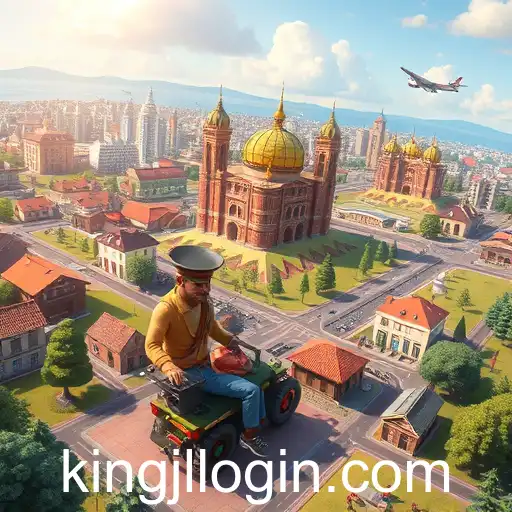

Simulation games present players with the opportunity to explore intricate worlds that mirror real-life systems. These games, which have grown exponentially in popularity over the years, focus on simulating various aspects of reality, often providing a rich and immersive experience. The category of simulation games is diverse, encompassing everything from city-building epics to life simulation titles that allow players to control virtual people.
One of the compelling aspects of simulation games is their capacity to offer both entertainment and educational value. Players often find themselves immersed in the process of strategizing, resource management, and decision making, which can translate to real-world skills. In a world that is increasingly becoming digital, simulation games serve as a bridge, allowing users to experience scenarios that would be difficult, if not impossible, to encounter in their everyday lives.
The keyword 'kingjl' surfaces prominently in discussions about simulation games on various online platforms. While 'kingjl' could be shorthand for discussions or a community surrounding a specific game or software, its prominence signals a particular enthusiasm or cultural movement within the simulation genre. For instance, simulation enthusiasts often gather in online forums to share tips, game modifications, and strategies that enhance the gaming experience.
Perhaps one of the most celebrated aspects of simulation games is their flexibility. Game developers constantly push the boundaries of these virtual environments, creating more sophisticated and realistic simulations. Whether it's controlling a bustling city in SimCity, managing the activities of Sims in The Sims series, or piloting aircraft in Microsoft Flight Simulator, players have the chance to lose themselves in an array of detailed experiences.
The rise of virtual reality (VR) has further expanded the possibilities within the simulation category. With VR technology, simulation games can submerge players into an even more immersive environment, offering a first-person perspective that heightens the sense of realism. This advancement has broad implications, from changing the nature of gameplay to offering new pathways in training simulations for various professional fields.
As we look to the future, the prospects for simulation games continue to grow with advancements in AI, graphics, and computing power. These technological strides promise games that will replicate reality with even greater precision and depth, providing gamers with richer experiences and developers with broader canvases to bring their creative ideas to life.
In conclusion, 'kingjl' and the conversation around it are emblematic of the broad and passionate community that surrounds simulation games. With their ability to educate, entertain, and enthuse, simulation games sit at a unique intersection of gaming and reality, one that is continually evolving and captivating the hearts of gamers everywhere.

KingJL emerges as a leader in the gaming industry by setting new trends and engaging communities worldwide in 2026.

Exploring the advancements in online gaming and the role of platforms like Kingjl in 2026.

Exploring the prevalent trends and innovations in the digital gaming industry, focusing on 'kingjl' and its impact.
Exploring the impact of kingjl on the online gaming landscape in 2026.

Exploring the gaming landscape of 2026 with a focus on technology and cultural shifts.

Exploring the currents of the gaming industry, focusing on digital transformation trends and how platforms like kingjl are adapting.
